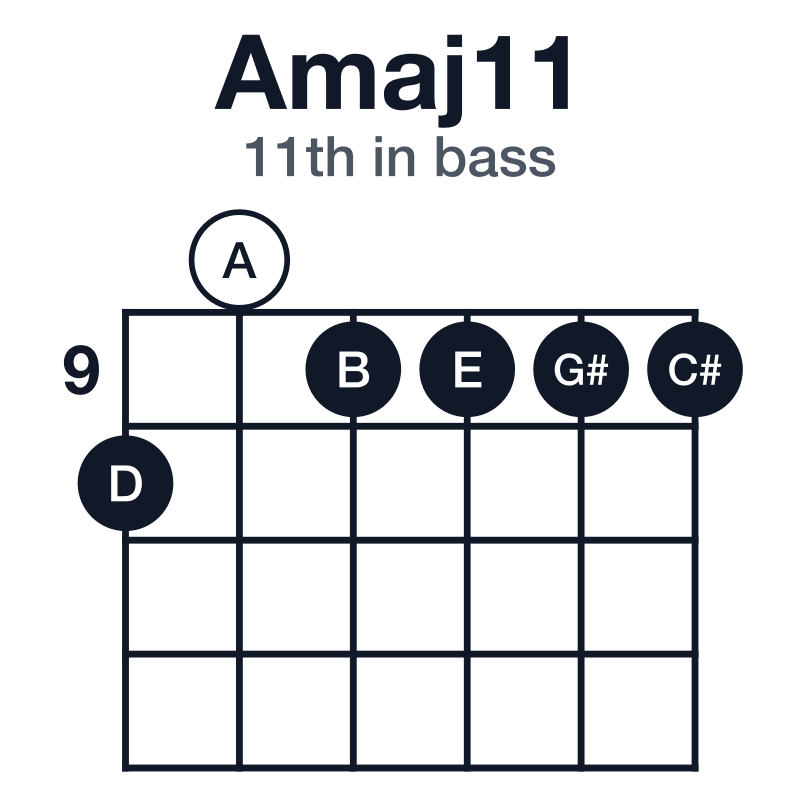
Amaj11 guitar chord
- Tap a note to hear it
- Arrows change position
- Fingers, notes or intervals
- Play the chord
About Amaj11 — 11th in bass
Amaj11 is A, C#, E, G#, B and D. Its natural is the same note name as the 4th, while the major 3rd remains.
In a close voicing, sits one fret above . A sharp 11th raises that note one more fret; Amaj11 calls for the natural 11th.
Let both notes sound only when you want that close interval heard. For the sharp 11th instead, played without a 5th, the chord is .
Also written AM11, AΔ11 or A major 11.
What 11th in bass means
Amaj11 in 11th in bass puts D in the bass instead of A, the 11th of the chord. The notes are the same; what changes is what the bass line does, which is most of why you would reach for it — it lets the lowest voice move by step where the root would have jumped.
One of Amaj11’s 9 shapes does this:10-0-9-9-9-9
How to use Amaj11
How you get to it. The turn that lands on Amaj11 is to — the ii and the V of A — and shares its third and seventh with , so the hand barely moves between them.
Hear it land:→→
In which keys. Every note of Amaj11 belongs to F# minor (the ♭III) and A major (the I, the tonic).
What to play over Amaj11
Useful scales
- +F#
Contains Amaj11 and adds thirteenth.
Chords near Amaj11
Change one note
open strings open strings
The common shapes and the derived voicings come from different places, and both are explained in how this site is built.